Thursday, June 5, 2014

MLB Overhauls Drug Policy

In late March, Major League Baseball and the MLB Player's Association reached an agreement to reform their Joint Drug Prevention and Treatment Program (full text of changes available here).  The new agreement enforces stiffer penalties for violators as well as increased testing of all types.  I will briefly outline the old policy here; more in-depth coverage can be found in an earlier post.

New Penalties

Under the old policy, a first time violation of the PED policy (the agreement as different penalties for "stimulants") led a 50 game suspension, a second time violation a 100 game suspension, and the third strike resulted in lifetime banishment from the game.  Under the new agreement, players will be suspended for 80 games for one positive test, 162 games (= one season) for a second, and lifetime banishment for a third.  Additionally, an in-season violation will bar a player from postseason participation, even if his suspension has been completed before the start of the postseason.  A first time violation includes the loss of pay for the duration of the suspension.  A second time suspension also includes the loss of an entire year's worth of pay, as opposed to 162 game's worth of pay (this is important in the case of postseason play; under the former agreement, a player with a 162 game suspension, e.g. Alex Rodriguez, would only lose 162/183ths of his pay).

Increased Testing

The new agreement ups the number of in-seasons urine samples collected from 1,400 to 3,200 (a 128% increase).  HGH testing increases as well with 400 blood samples collected in season on top of the 1,200 collected during Spring Training.  The new agreement also calls for something called Carbon Isotope Ratio Mass Spectrometry, which can be used to detect PED use in the two weeks leading up to the test (PubMed article).  This mass spec technique is approved by WADA for the monitoring of HGH and testosterone usage.

First time offenders will be subjected to increased future testing: six unannounced urine tests and three unannounced blood tests per year for the remainder of that player's career.

Etc.

Avoid tainted meat, too
The MLB is allowing (mandating?) teams to supply certified supplements to their players year-round.  This is to prevent the "tainted" supplement excuse whereby a player either "didn't read" the label of a supplement, the label did not list a particular compound, or a banned substance snuck its way into the otherwise legal supplement during manufacturing.

Reaction

The most important facet to this story is that, from my understanding, the push for change came from the players and the Players' Association.  The players want stiffer testing and want the game to be cleaner.  Baseball--perhaps more than any other sport--is obsessed with the "integrity of the game" and any reasonable sports fan can agree that PEDs hurt the integrity of any sport and the spirit of competition.  It is refreshing to see a group of players take this sentiment to heart and do something about it.

This reform still leaves something to be desired.  Eighty games for a player making $20 million a year for six years is a drop in the pail.  If that player got his fat contract in part due to his doping regime, he won't have any regret about his drug use.  The first time penalty is certainly stiffer, but it is not a massive deterrent to doping.

The IAAF recently returned to a four year ban from competition for a first time "serious" (their words, not mine) doping offenses.  For a runner, a four year banishment could span the entire prime of a career and I would argue is roughly half of an athlete's competitive career (Lagat is an exception to this).  Returning to high level performance is no small feat: maintaining training for four years with
only distant goals in sight is an immense mental battle compounded with the emergence of younger competitors looking to replace the old guard.  Dwain Chambers and Justin Gatlin are unique in their returns to competition, especially as sprinters.  The point I'm trying to drive home here is 80 games for a first time offense does not in any way derail the career of a baseball player in the same way that it might for a runner.  Baseball careers are longer than running careers yet the penalty for a first time offense is only half a season.  If I'm a AAAA player trying to make my break or a borderline star trying to get to the next level and cash-in, I'd think long and hard about the benefits to of starting a doping regime compared to the relatively few costs.

This leads to my next point: annulment of contracts upon a positive test.  As I've argued before, drug-inflated numbers leading to a fat new contract is equivalent to lying on one's resume.  If I lie on
my resume and get caught, I get fired.  In baseball (and other sports), if a player lies on his resume, his pay gets suspended for half a season but the team is still on the hook for the rest of his contract, which they might have offered under essentially falsified numbers.  The ultimate deterrent to doping--especially in baseball--would be to allow teams to void a player's contract if he tests positive for PEDs.  The annulment does not have to be compulsory, but the team should have the option.  Unfortunately, the Players Association would never agree to such a provision, but in the world of contracts worth hundreds of millions of dollars, such a clause would be devastatingly effective in fighting doping.

There was also no mention of increased off-season testing.  A truly comprehensive doping code has stringent out-of-season testing in addition to in-season testing.  Relaxed off-season doping control means guys can go crazy with their workouts, recover with PEDs, and reap the benefits in-season (I've talked about this previously).  Additionally, injured players could dope up to hasten their recovery process.

In all, a good step forward by baseball by tightening their policy into what is likely the strictest doping code in the four major American sports.  That said, there is still work to be done.

Tuesday, May 13, 2014

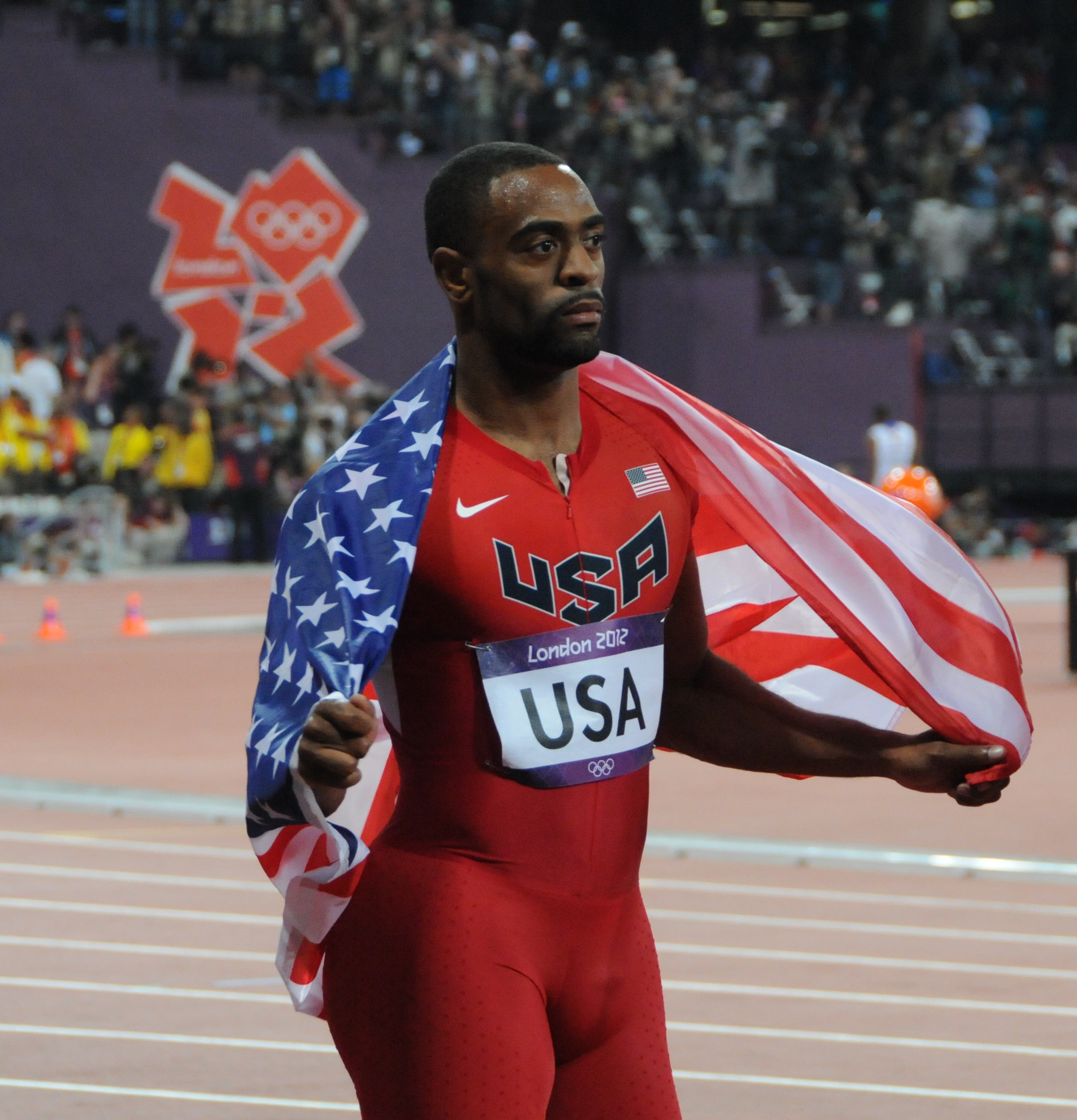
Tyson Gay gets a year...kind of

Last July, Tyson Gay and a handful of other sprinters tested positive PEDs in what some called a watershed day for the sport of athletics (it wasn't).  Gay got popped for testosterone, HGH, and "two other banned substances" that he acquired from an anti-aging specialist.  At the time of his ban, he said, "I don't have a sabotage story....  I basically put my trust in someone and was let down."  Gay was originally sentenced to a two year ban from the sport under IAAF doping code at the time (the IAAF last summer was pushing to move to four year bans but it doesn't appear as though that change was made).

I would also like to point out that Gay was enrolled in the USADA's "My Victory.  I compete clean" program.  Best I can tell, all this means is that he promised not to take PEDs.  In fact, anyone can sign up for its successor program TrueSport here.  I'm not really sure what signing up buys you or any other athlete.  Somewhat related, Asafa Powell was enrolled extra drug testing to prove has cleanliness before his positive test, which is a different display of cojones to sign up for a legit anti-doping program while you're on the juice.  In the summer of 2011 I called into The Big Show on WEEI and said that if I were a doper and knew I wasn't going to get caught, I'd do the same thing to show the world that I was clean.  I wouldn't say I was torn apart for that view, but the hosts didn't exactly follow my logic.  My point is, if an athlete is 95% certain he isn't going to get busted, it is beneficial to enroll in such a program to buy public support.

In the past week, Gay's ban was reduced to one year because he played nice with the USADA in its investigation of his offenses.  In exchange for passing along information about potential other dopers, Gay's suspension was reduced under WADA code 10.5.3.  Not only has his punishment been reduced, but the penalty began last June when he originally failed the drug test.  It's been determined that he started serving time before his official penalty was announced and he is thus being rewarded.

So what's this all mean?  Gay can start competing again right when the European circuit gets going this June.  He got a slap on the wrist and, in essence, was told to take a 10 month break from competition for training.  He has elected to return some prize money and his silver medal from the 4x100m at the 2012 Olympics, but he can win the money right back.  Who wouldn't be interested in seeing what Gay can do in his first couple of meets back from suspension when he's supposedly clean?  The appearance fees he'll command will be as high as ever.  Additionally, I'd guess Gay was dropped by some sponsors, but those will come back.  He's marketable, and America loves a redemption story.

I have two criticisms of how this case has been handled (aside from the reduction in penalty): the first is that the IAAF needs four year bans.  Gay was less than a month away from turning 31 when he got banned.  Slap a four year ban on and he's almost 35 when he comes back.  His career would be over, as should be the case for cheaters.  He could, feasibly, come back a month away from 33 and still be competitive at the elite level.  This argument is nothing new to anyone who's been reading my posts.

The second, more grave, criticism I have is the precedent WADA is setting here.  You can dope, get caught, snitch, and get a greatly reduced penalty.  Ready for what's worse?  Sean Ingle of the Guardian writes: "Under Wada's new code from January 2015, athletes who cheat could get a full amnesty and complete anonymity in exchange for information – and keep their prize money too."

WHAT.

WHAT.

WHAT.

LET ME GET THIS STRAIGHT: Someone can drug himself to the gills, get caught, rat out his easily replaceable supplier that he probably didn't care about in the first place, and get off scot-free?  Excuse me?  This isn't counterterrorism; this is anti-doping.  Who defines what sufficient information is to be granted amnesty and anonymity?  How far does a nice chunk of change from a sponsor go for reducing that minimum?

TAKE IT ALL
If I were an elite, I'd see this as a green light to load up on everything in the pharmacy, walk over to vet's office, and load up on everything in there.  I'll run super fast and roll in the cash.  Maybe I piss hot, maybe I don't.  If I do, I rat out my doctor, and no one will ever know about my positive.  I keep my sponsors, I keep my prize money, I keep my medals, I keep my reputation, I keep everything.  

This is absurd.  We all know the dopers are ahead of the testers, so if someone's testing positive and is willing to talk, how much new information are we going to get?  If they had some super secret undetectable drug, wouldn't they have taken it so as to not get popped?  Sure, we could see marginal increases in information, but nothing groundbreaking.  But you know what would be groundbreaking?  Banning a star for four years.  Ruin their career and their reputation.  Destroy their livelihood.  Strike the fear of god into the athletes.  It's the only way we're getting a clean sport.

---------------------------------------------------------------------------------------

After reading this post, one of my friends asked me if I thought this new rule was legislated to protect the sport of track from a potentially dirty Usain Bolt.  Given that it is a WADA rule and not an IAAF rule, I don't think it was written with Bolt specifically in mind.  It could, however, incidentally protect NBC's chosen Olympic heartthrob come 2016.

Wednesday, April 30, 2014

Fritz vs. 'Them'

I would like to begin this post by apologizing to my mother for the headshot that appears in Bryan's last post. To any readers who don't know me personally: I promise I don't usually look like that.

My current thinking on the NCAA is fairly well-captured by a column that Bryan and I ran in the Middlebury Campus newspaper last week, and what I want to get into here is essentially an expounded version of that piece. For posterity: let it be known that Bryan and I penned the column before the NCAA changed its policy on feeding athletes. Call us game-changers.

The NCAA's (from henceforth, 'them') most basic orientation to its athletes is two-fold: to make sure that we are brand ambassadors for the national organization (see Bryan's post) and to ensure that we behave in a way that reflects positively on the brand. The latter point is, in my view, a vehicle to a deeper sort of criticism of how they conduct business.

Consider three anecdotes from my weekend in Lincoln:

1. In the athlete hospitality room, there was a staff member (Tyrone) on hand to ensure that we did not take an unreasonable number of snacks.
2. The championships featured an elaborate and fairly confusing credentialing system. There were certain areas designated for spectators, for athletes, coaches, media folks, etc. There were scores of staff stationed at choke-points to ensure that no one was in violation.
3.When we wanted to go to the field house to warm-up on Friday, they assigned us a volunteer to supervise as we waited for the bus. His name was Alex. I'm not sure what exactly he was looking out for, but I was probably the only athlete who spoke with him all weekend. This show was surely just as dehumanizing for the scores of "volunteers" as it was for us.

The point here is simply that they treat their athletes like children. This point isn't in itself that damning; many 18-22 year-olds probably deserve to be treated like children, and I happen to have the privilege to be part of an athletic program that trusts its athletes to drive college-owned vehicles, host recruits and do their own homework.

It is a bit suspicious, however, that this paternalistic attitude is paired with indulgence. When you're at the championships, they pay for everything: travel, hotel, meals, snacks, gear. I got the sense that all of this expense was supposed to make us feel important, like we were being celebrated for all of the hard work that it took just to qualify for the meet. For most of my teammates, this effect was realized; it just left me feeling like I was being manipulated.
Mark Emmert doesn't stand a chance.

Here is the part where I wave my English-major flag a bit. There is a word in literary criticism for this sort of indulgence that is used to cover up a less fun reality: carnivalesque. The idea comes from Mikhail Bakhtin, who thought of the carnival as a way for those in power to keep their subjects contentedly suppressed. The carnival presents a warped version of reality in which traditional standards and power structures are temporarily put aside and subordinates get to feel like they run the show, if only for a short while. Think Mardi Gras or, in a lesser sense, Halloween.

The NCAA championship doesn't feel like real life. It feels like a slightly altered form of real life in which people are constantly showering you in attention and free stuff, asking in return only that you abide by a few rules that easily go unquestioned in the face of so much free stuff. Bakhtin's point, and mine here, is that we should try to look past such a system to see what is really going on.

What is really going on at NCAA championship events is that athletes are being combed to be NCAA spokespersons who return to their real lives after a weekend of "carnival" to show off their flashy new gear and tell stories about how amazing it all was. As long as that system is working and we all continue to "participate" (their favorite word, but not in the way that Bakhtin uses it) in the big show, no one is likely to ask questions like "What does the NCAA do for me?" and "Why does all of this exist in the first place?" (or, if you are a Division-I men's basketball player, "Where is all this money going?") When people start to do that, they realize, it will mean an end to all the fun and games.

Image courtesy of Wikipedia

Tuesday, April 22, 2014

Tacit approval of what we don't approve of

Last month, I qualified for and Participated in the NCAA Division III Indoor Track & Field Championships.  While the weekend in Lincoln, NE, and the frantic fortnight leading up to the event could be the subject of decently-lengthed short story perhaps of interest to a non-trivial number of people, I'd rather use this space to talk about my first personal experience with the NCAA; specifically, the manner in which the NCAA uses its student-athletes as advertisements for itself.

Briefly, some background.  I qualified for the meet running the second leg of Middlebury's 4x400m relay.  Fritz Parker, blog co-contributor, ran the first leg.  Middlebury also qualified one guy in the mile, a women's DMR, a woman in the 400m (she ran the 800m leg on the DMR), and a woman in the high jump.  We arrived in Omaha, NE, on a Thursday night and left before dawn on the following Sunday.  The Championships were on the intervening Friday and Saturday.  In terms of performance, my relay came in 12th (out of 12, but saying we were 12th in the country sounds a lot better than last), but we also entered the meet seeded 12th (again, last).
F. Parker             B. Holtzman             A. Nichols               P. Hetzler
As I mentioned, this weekend was my first direct experience with the NCAA.  Prior to my Participation, I had perceived the NCAA as two factions: the governing body of big-time college football (and basketball, but I don't follow CBB the same way I do CFB) and as the name of the national meet which I had spent four years trying to qualify for (much in the same way that, back in my day, Nike Indoor Nationals was the namesake of the national T&F meet run by the NSSF).  I never gave much thought to its governance over other sports and student-athletes.  The NCAA had never affected me before so I never considered it in that context.  The only NCAA regulation I ever cited was its ban on gambling as an excuse to get out of playing poker for money while home on school breaks.

That said, I have historically been a skeptic of the NCAA in regards to how it treated its high-profile athletes and teams.  I always thought the organization was out to get the odd athlete or program instead of protecting those athletes and programs (some examples, and it would be irresponsible not to mention that Oklahoma had to self report an NCAA violation because a few players ate too much pasta.  Thanks in large part to comments by Shabazz Napier, schools can now feed their athletes).  This historical skepticism was recently compounded by a renewed interest in the NCAA manifest largely by reading numerous news articles both criticizing and defending it.  With this in mind, I undoubtedly--perhaps subconsciously--approached my experience with disdain for the NCAA.

The NCAA Experience is one of continuous overstimulation.  Everywhere I looked, the NCAA was present.  From being constantly babysat to the countless number of blue logos emblazoned around the track, there was no escaping the watchful eye of the NCAA (nor the constant reminder that we were at UNL: popcorn isn't just popcorn, it's Husker popcorn; the time on the clock isn't simply just time, it's Husker Time, which, it's worth noting, was incorrect).  This made me uneasy.  Forgetting to wear my Participant badge made me feel like I was accumulating an NCAA infraction for each minute I was without it.

The NCAA has, in a sense, adopted the "everyone gets a trophy" attitude towards the championships.  By qualifying, I will eventually be sent an NCAA pull-over I can proudly wear around telling the world I Participated in an NCAA event, a drawstring bag, and a commemorative medallion.

(Side note--really wish I could do foot/endnotes on this blog: I am usually stoutly against the "everyone gets a trophy" attitude, but not in this case.  For example, I did not receive an All-American trophy by simply Participating, so there was some separation between the winners and the Participants.  Additionally, the commemorations are a nice reward for the accomplishment of qualifying.)

Right at the door to the track was an ad hoc gift shop selling shirts, sweatshirts, and hats with the NCAA logo and the event printed on them.  Items were flying off the shelves, appealing to the athlete's desire to be marked as a Participant when they return to their respective institutions (I'm guessing they don't have to wear a badge at school labeling them as a Participant).  I am guilty of purchasing apparel: I bought a quarter-zip sweatshirt and an Under Armour technical shirt.

Wearing my gear makes me uneasy on two fronts: first, I feel kind of obnoxious by showing such an outward display of my accomplishment.  Realistically, nobody cares that I Participated in the meet.  I also separate myself from my teammates; they don't need a reminder that we went to NCAAs--they all know we did.  Second, by wearing my gear, I passively tell the world I support the NCAA in whole when I staunchly do not.

We are Participants
The second point is what really gets me.  At most schools around the country, some segment of students (athletes?  student-athletes?  Participants?) are wearing NCAA sponsored apparel.  Here at Middlebury, I see students who have NCAA patches sewn on their backpacks, students carrying NCAA water bottles (officially sponsored by Powerade), etc.  Even when you're not at an NCAA event, the NCAA is present and ever-looming.  We Participants are propagators of its presence and the NCAA knows this.  It knows the Participants will display their free mementos and commemorations creating a walking advertisement out of every Participant.  When you add up EVERY athlete in EVERY sport in EVERY division, this number becomes quite large.  I'd wager 90% of them will show the world a piece of their memorabilia with some frequency.  This reminds everyone who sees such memorabilia a. that the NCAA exists and b. that Participating in an NCAA event is good.  To the second point, if one qualifies for NCAAs in something, one is obviously good at what they do.  The association of NCAA = good is immediate.  Unfortunately, there is not much depth to this association.  The achievement of making NCAAs is remarkable, but the associated approval of the NCAA--either by the wearer or viewer--is not questioned when it should be. 

This brings me to my concluding question: how can the accomplishment of competing in an NCAA event be separated from the NCAA (and thus tacit support of the NCAA)?  Students should not feel even the slightest amount of guilt about showing the world a memento of their accomplishment.  They should be proud of their accomplishment.  I am proud, damnit.  But I cannot, in good conscious, show my pride.  This, to me, is unfortunate and is a slight to every athlete in the country.

Tuesday, April 15, 2014

EPO: From Cytokine to Speed

Background

Last fall, I was enrolled in a metabolism course at Middlebury.  We were assigned a 40 minute presentation on a metabolic disease.  To the eleven other students in the class who were planning on going to medical school, this was an interesting topic and was designed with their interests in mind.  Metabolism is a fascinating field of study with many aspects, so I asked my professor if I could do my presentation on a different metabolic topic: PEDs.  After some preliminary research, I settled on presenting about EPO.  The following is what I came up with (there is some overlap with a previous post).

What is this "EPO" thing, anyway?

EPO--short for erythropoietin (derived from erythropoiesis, combining the Greek erythro meaning red and poiesis meaning generation; an erythrocyte is a red blood cell, or RBC--the cells responsible for transporting oxygen in the blood)--is a cytokine (protein signaling molecule) that induces red blood cell production by preventing red blood cell progenitors from committing apoptosis (cellular suicide or death) and allows them to proliferate and differentiate.  EPO occurs naturally in your body!  It is a 34 kilodalton glycoprotein that is about 165 amino acids long.  Roughly 40% of its weight comes from glycosylation, which is the addition of sugar groups to amino acid residues on the peptide chain (in the case of EPO, this is mostly N-linked glycosylations, mainly occuring on asparagine residues).  In addition to its primary role as an inducer of RBC production, EPO has a variety of secondary functions, including neural production during stroke (EPO can cross the blood-brain barrier) and implication in apoptotic pathways through the PI3-kinase pathway.  In the fetus, the EPO gene is expressed in the liver and after birth it is expressed in the kidney.  In addition to its well documented use as a PED, synthetic EPO is an incredibly successful drug in the clinic, used mainly to treat patients with anemia (RBC deficiency).  It has also been used in patients who have diabetes, Alzheimer's and cardiovascular disease.  There are some drawbacks, though, particularly in cancerous patients (many of whom are prescribed EPO): synthetic EPO has been shown to block tumor cell apoptosis, enhance tumor progression rates, increase the metastatic rate of cancer, and negating radiation treatment by assisting in tumor angiogenesis (for those of you keeping count, that's 4 out of the 6 Hall Marks of Cancer--original paper and follow-up; some of the more generally interesting and accessible journal articles you'll find).

How does EPO get produced in the body?

http://www.sciencedirect.com/science/article/pii/S0006295211004291
I'm going to start large and then get smaller.  EPO production is dependent on physiologic conditions: hypoxia in arterial blood running through the kidney or anemia.  Under these conditions, the EPO gene is expressed in the kidney and produces the EPO protein (this is known as the Central Dogma of Molecular Biology: DNA is transcribed into RNA, which, after processing, is translated into a protein).  EPO is then directed to cells expressing its receptor, EPOR.  Remember that EPO is a signaling molecule: that means it "swims" around the extracellular matrix and blood until it finds a receptor protein on the surface of a cell specifically tailored for it to bind to.  Compounds of EPO's size cannot move directly through the cell membrane to catalyze chemistry in the cell; instead, they bind to a receptor that can then catalyze many things inside the cell.  In this case, EPOR is a Type I transmembrane receptor protein (example).  Type I means that it is composed of alpha-helicesand transmembrane means that the protein sits directly in the plasma membrane and has parts of it exposed to the outside of the cell and into the inside of the cell.  EPOR is a member of the cytokine receptor superfamily, which is a group of cytokine receptors that have four conserved cysteine residues and a conserved Trp - Ser - X - Trp - Ser motif in the extracellular domain (conservation, in this sense, means those amino acid residues appear in roughly the same place in the amino acid sequence in many different proteins that have similar functions.  Conserved sequences are usually pretty important for function.  Wikipedia page).  EPOR is mainly expressed in red blood cell progenitors as they are nearing death either to rescue them from apoptosis or to induce their proliferation.  There has also been research showing EPOR being involved in RBC differentiation (specialization of a cell's function).

All right, we have EPO, and it's found a receptor.  What does it do now?

Previously, I briefly mentioned that EPO works via a JAK-STAT signaling mechanism.  I'm now going to go through that in more detail.  I truly believe that one does not need a background in biology or chemistry to understand what I'm about to explain.  All you need is a healthy dose of common sense, because when you think about what's going on, it does make sense.
http://www.jbc.org/content/282/28/20059.short
Signaling that occurs via cytokine receptors is promoted by enzymes in the cell known as protein tyrosine kinases (PTKs) and is thought to be terminated by enzymes known as protein tyrosine phosphatases (PTPs; I will revisit this idea in a bit).  Like I said before, EPO is directed to cells expressing EPOR.  EPOR sits in the membrane as a homodimer (a dimer is two proteins associated with one another; thus, a homodimer is two of the same protein associated with one another) in an inactive conformation.  EPO comes in and binds to the receptor dimer and causes it to change conformation, activating it.  This idea of active and inactive conformations dependent on ligand binding or ambient conditions is a huge theme in biology; it provides a simple mechanism to turn proteins/enzymes/receptors/etc. on and off.  Upon the conformation change, JAK2 (a random kinease--seriously, JAK stands for Just Another Kinase.  Kinases are enzymes which phosphorylate things), which is associate with EPOR, is activated via an autophosphorylation mechanism (phosphorylating itself).  Phosphorylation is the addition of a phosphate group (PO4(3-)) to a moiety.  Phosphorylation is the way by which just about everything in the cell is activated; when you hear about ATP (adenosine triphosphate) being the energy currency of the cell, it activates things by putting one of its phosphate groups on that thing and becomes ADP (adenosine diphosphate).  This autophosphorylation, in addition to activating that particular JAK, promotes further autophosphorylation of other JAKs and promotes further kinase activity.  This is a positive feedback loop, which means when this thing happens, it makes more of either itself or another thing happen.  Upon the autophosphorylation of JAK2, eight tyrosine residues on the cytoplasmic side of the cell (the inside) are phosphorylated (tyrosine phosphorylation happens a lot in protein signaling pathways).  The tyrosine phosphorylation leads to SH2-dependent recruitment of STAT5.  SH2 is a conserved protein domain (in larger proteins, different parts of the protein will fold up and form their own ball-like structures that act basically independently from the other domains/rest of the protein) that is roughly 100 amino acids long that selectively binds or docks to phosphorylated tyrosine residues on other proteins.  STAT5 (Signal Transducer and Activator of Transcription 5) is activated by this selective docking.  Once STAT5 has been activated, presumably via phosphorylation, it forms an antiparallel dimer with itself (proteins aren't symmetrical and have some form of directionality, so in this case, the two STATs are running in opposite directions of one another, kind of like a two-way street) and translocates to the nucleus.  The nucleus of the cell has its own membrane (well, it really has two, but that's besides the point), so the STAT dimer manages its way through those membranes into the body of the nucleus.  Once it's in the nucleus, it acts as a transcription factor for important erythro-regulation genes as well as possibly activating GATA-1, another transcription factor for erythro-regulating genes.  Transcription factors are proteins that promote the expression of a gene into a protein (running through the Central Dogma: DNA --> RNA --> protein).

References


1. Bodary, P. F.; Pate, R. R.; Wu, Q. F.; McMillan, G. S. Effects of acute exercise on plasma erythropoietin levels in trained runners. Med. Sci. Sports Exerc. 1999, 31, 543-546.
2. Chateauvieux, S.; Grigorakaki, C.; Morceau, F.; Dicato, M.; Diederich, M. Erythropoietin, erythropoiesis and beyond. Biochem. Pharmacol. 2011, 82, 1291-1303.
3. Klingmüller, U.; Lorenz, U.; Cantley, L. C.; Neel, B. G.; Lodish, H. F. Specific recruitment of SH-PTP1 to the erythropoietin receptor causes inactivation of JAK2 and termination of proliferative signals. Cell 1995, 80, 729-738.
4. Kretz, A.; Happold, C. J.; Marticke, J. K.; Isenmann, S. Erythropoietin promotes regeneration of adult CNS neurons via Jak2/Stat3 and PI3K/AKT pathway activation. Molecular and Cellular Neuroscience 2005, 29, 569-579.
5. Maiese, K.; Chong, Z. Z.; Shang, Y. C. Raves and risks for erythropoietin. Cytokine Growth Factor Rev. 2008, 19, 145-155.
6. Roels, B.; Bentley, D. J.; Coste, O.; Mercier, J.; Millet, G. P. Effects of intermittent hypoxic training on cycling performance in well-trained athletes. Eur. J. Appl. Physiol. 2007, 101, 359-368.
7. Sasaki, A.; Yasukawa, H.; Shouda, T.; Kitamura, T.; Dikic, I.; Yoshimura, A. CIS3/SOCS-3 suppresses erythropoietin (EPO) signaling by binding the EPO receptor and JAK2. J. Biol. Chem. 2000, 275, 29338-29347.
8. Schindler, C.; Levy, D. E.; Decker, T. JAK-STAT signaling: from interferons to cytokines. J. Biol. Chem. 2007, 282, 20059-20063.
9. Smith, J. A. Exercise, training and red blood cell turnover. Sports medicine 1995, 19, 9-31.
10. Tong, W.; Zhang, J.; Lodish, H. F. Lnk inhibits erythropoiesis and Epo-dependent JAK2 activation and downstream signaling pathways. Blood 2005, 105, 4604-4612.
11. Yao, Z.; Cui, Y.; Watford, W. T.; Bream, J. H.; Yamaoka, K.; Hissong, B. D.; Li, D.; Durum, S. K.; Jiang, Q.; Bhandoola, A.; Hennighausen, L.; O'Shea, J. J. Stat5a/b are essential for normal lymphoid development and differentiation. Proc. Natl. Acad. Sci. U. S. A. 2006, 103, 1000-1005.

Tuesday, October 29, 2013

LeBron James and PEDs

One of my friends recently shared this blog post with me on Facebook and asked for my thoughts on it.  Before I start picking through it, I need to remind everyone that the goal of this blog isn't to throw out baseless accusations but rather to have an informed discussion about PEDs and to educate those who want to learn about it.  If I were to spew baseless accusations and say everyone was on PEDs, I would lose any sense of credibility that I might have had.  With that in mind, I'm going to approach this post as a response of the original post that was shared with me and an O.J. Simpson-type "If I were to accuse LeBron James of doing PEDs, this is how I would have done it.

Dec. 9, 2009 - age 17
May 10, 2012 - age 21
The author's main argument about James' PED use is his increase in size since he came into the league.  James has unquestionably gotten much bigger since he made his NBA debut in the fall of 2003, but he was 18 at the time.  Males may continue to grow past the age of 18, or at the very least, their bodies will fill out.  So, the photo comparison of James when he came into the league and now is unfair at best.  To drive this home, look at these two photos of me flanking this paragraph (for reference, my birthday is April 28, 1992).  I am the same height (5'8") and basically the same weight (~175 lbs...I fluctuate) in both pictures.  However, if you look at the one from this most recent season, you'll notice I look a lot bigger and thicker basically all throughout my body.  This is because, as I said, I filled out and I am still filling out.  Now remember that I also go to school and have a finite amount of time to dedicate to exercise and contrast that with the fact that James' job is play basketball (and has been since age 18) and consequently he is paid to be in shape.  It's not particularly surprising that he would bulk up over the course of his career.  The better argument is that because we know PEDs are used mainly for recovery (right?), James has used PEDs to help increase his workload and has undergone uncharacteristic growth since he's been in the league, but that is difficult to prove.

These do not look like basketball players
The second point the author raises, also related to size, is the amount cardio exercise James participates in and how much CV fitness is needed to play in the NBA.  He says that there's no way James could be 6'8" - 275 lbs with his practice and game structure.  Note that James is a light 250 lbs, not 275 lbs, so there's issue #1.  The author continues saying that most basketball players have "natural runners' bodies."  Now, I don't know what runners he's looking at, but as someone who was spent a lot of time with runners and watching runners, I've never come across someone who looks like James, Paul Pierce, or Kevin Durant.  Even the point guards aren't built like runners.  The fact of the matter is, basketball fitness is starkly different than track fitness.  Basketball is mostly about short bursts of speed and explosiveness as well as lateral movement ability.  Track is about sustained speed over longer distances (and yes, 100m is "long").  A basketball court is 94 feet, and rarely are those full 94 feet being run at once.  Basketball players are always starting and stopping.  The types of movements required of a basketball player mean that they have to be larger than runners otherwise they'd never be able to stop on a dime and move the other direction.  So yes, while they are getting CV exercise, it's a different type of CV, and there's a reason why no one runs suicides to lose weight.

If I were to implicate James for steroid use, the angle I would have taken was his playing style.  James is one of the all-time great slashers.  He beats the crap out of his body every night he's on the floor.  Even when he isn't driving to the hoop, many of the shots he creates involving leaning into his defender and then shooting a fade-away.  He's one of the most physical players in the game to the point where one would think his body needs a little extra help to recover.  If a team wins the Finals, that team plays no fewer than 98 games, and it almost always play several more.  With the way playoff basketball works, it's hard to see how anyone could play the way James does every night and not have his performance deteriorate or suffer an injury.  A little HGH would go a long way, especially when gearing up for the playoffs to ensure good health for the championship push.

Friday, September 13, 2013

Cultures of Winning

The 2012 Red Sox season was a disaster.  The team went 69-93 for a last place finish in the American League East and they had the third worst record in the AL.  The 2013 Red Sox, by contrast, currently have the best record in baseball and lead the AL East by 9.5 games.  So, what happened?

The 2012 season came directly on the heels of the apocalyptic 2011 season.  After acquiring sluggers Adrian Gonzalez and Carl Crawford, hopes were high for the team.  The Boston Herald and Michael Holley (somewhat tongue-in-cheek) both anointed them the "Best Team EVER" (2:14 in the WEEI link for the audio).  Mikey Adams predicated 103 wins for the Sox.  They even announced over the offseason that they were aiming to win the World Series, which of course is always the goal, but most front offices don't outright say that.  The season was largely a success and the Sox held a 9.5 game in the AL Wild Card race over the Tampa Bay Rays on September 3rd.  The team, as everyone knows, wound up missing the playoffs due to a 7-20 record (.259 winning percentage) for the month of September.

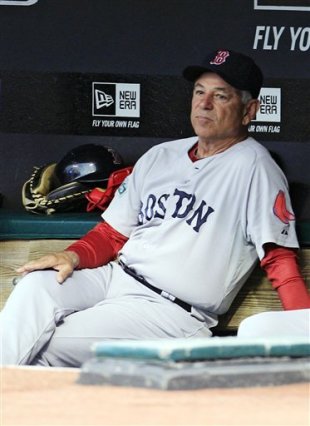
After this historic collapse, a range of controversial topics emerged.  Manager Terry Francona, whom many consider to be the greatest manager in Red Sox history, was fired, as many thought he had lost control of his clubhouse.  General manager Theo Epstein was traded to the Cubs.  The chicken and beer scandal emerged (it's worth noting that since that article was published, we found out that John Lackey pitched most of the season while needing Tommy John surgery.  I'm willing to give his shortcomings a pass on that basis).  And, Bobby Valentine was hired as the team's new manager, which would later lead to speculation that new GM Ben Cherington was not given his pick of manager, instead being overrode by team president Larry Lucchino.

Despite having basically the same talent as the previous year, the 2012 Red Sox stunk.  The clubhouse was, by all accounts, toxic.  From Bobby V.'s "Nice inning, Will" comment to Carl Crawford constantly complaining that the Boston media was too tough on him, there was not much clubhouse cohesion.  And then, on August 25th, the Los Angeles Dodgers threw the Red Sox a bone.  The Sox were able to trade the Dodgers proverbial turds Gonzalez, Crawford, and Josh Beckett (as well as Nick Punto, who was not a turd) for some pocket lint and a couple of half-smoked cigarettes.

This trade basically let Ben Cherington press a reset button on the team and allowed him to build it from the ground up in his mold.  His first move was, not surprisingly, to fire Bobby Valentine and replace him with former pitching coach John Farrell.  Cherington then went on a binge of signing "good guys": David Ross, Johnny Gomes, Mike Napoli, and Shane Victorino.  The general feeling around the city--and my hunch--was that this group of ball players wasn't talented enough to contend for the playoffs, much less a world title, and that the 2013 season would be a "bridge year" until youngsters Xander Bogaerts and Jackie Bradley, Jr. (amongst others) would be ready for full-time jobs in 2014.

Bridge year indeed.

The Red Sox have reverted some to their 2003-2004 form when they were a bunch of Idiots who rallied behind the slogan "Cowboy Up".  They've stopped shaving as a form of brotherhood.  They breathe baseball and don't want to think about anything else, unlike Josh Beckett's famed "My off day is my off day" golf outing on an injured back the previous year.

Throughout the season, Tony Massarotti has been saying that the Red Sox didn't have enough talent to be a serious contender; that their lack of talent would eventually catch up to them.  And I agreed.  But what both Mazz and I did not account for is the importance of culture in an organization.  That culture can make up for shortcomings in other areas.  The 2013 Red Sox are the prototypical example of this.  Not only do they have a winning attitude, their culture is one of hard work and success.  Career coaches will say that people who work hard are often more successful than those who try to coast by on talent, and the Red Sox have shown us exactly that.


A classic example of over-the-top talent is the original Dream Team.  Coach Chuck Daly was worried that his group of NBA superstars would march into the Olympics thinking they were invincible due to their obscene talent level and might get surprised.  To combat this, he held a scrimmage against a group of college all-stars and through his coaching decisions, he threw the game.  The lesson he wanted to have reach his team was that despite their potential, a poor attitude could lead them to failure.  The rest of the story is history.

Throughout my life, my father has preached to me the importance of culture in organizations.  That establishing a healthy culture in an organization is of the utmost importance and that failure to instill such a culture will ultimately whittle away at the success of the organization.  When I worked at Infinity and asked citizen-owners (Infinity only has employees insofar as they have people they submit W-2s for; instead, they have citizen-owners.  This is a major part of the culture there because it implies that the workers take ownership over the company, their work, and that they all work together as a team) what their favorite part about Infinity was, the unanimous response was the culture.  They said that working at Infinity was unlike any other company they had worked for, and, as a result, they were happier.  A happy worker is a productive worker.  And to circle back around to the Red Sox, the players are happy playing baseball, and who would have guessed that they are now playing baseball well.

I called this article "Cultures of Winning" because there is not one distinct "winning" culture (and "winning" can be more broadly defined as success).  Each organization will be strong in certain cultural areas and weak in others; the organization (both leaders and what I'll call followers) need to work to come up with a culture that will lead to its success.  Once a winning culture is established though, the organization must continue to work to maintain that culture.